
Last Updated: November 4, 2026
Quick Summary
A door lock hard to turn is usually a sign of friction, not failure, and the resistance comes from one of three places: the key, the cylinder, or the door frame. Test the key in a different lock, inspect the keyway, and check the bolt with the door open to find which one before you fix it.
- Never force a key that will not turn, because a bent key can snap off inside the cylinder.
- Apply a one- to two-second burst of silicone-based or dry PTFE lubricant into the keyway.
- Avoid graphite powder, cooking oil, WD-40 as a long-term fix, and grease in your lock cylinder.
- If the bolt moves freely with the door open but sticks when closed, the door has shifted.
- Call a licensed locksmith when the key is stuck, broken off, or the lock will not secure the door.
Table of Contents
- Why Is My Door Lock Hard to Turn? A Safe Diagnostic Sequence
- How to Fix a Door Lock That Won't Turn With Key
- Choosing the Right Stiff Door Lock Lubricant
- Signs of a Failing Door Lock You Should Not Ignore
- Weather, Door Pressure, and Lock Type Differences
- When to Call a Licensed Locksmith for a Stiff Lock
- Frequently Asked Questions
Why Is My Door Lock Hard to Turn? A Safe Diagnostic Sequence
A door lock hard to turn is usually a sign of friction, not failure. The key binds, the knob drags, and you start to wonder if it will break off in your hand.
The trick is to test before you fix. Work through three quick checks in order, and you will know whether the problem is the key, the lock, or the door itself.
A stiff lock is a lock with resistance in the keyway or the bolt. The resistance comes from one of three places: the key, the cylinder, or the door frame. Find which one, and the repair gets much easier.
Step 1: Test the Key in a Different Lock
Try the same key in another door it opens, or try a spare key in the stiff lock. If the spare turns smoothly, the first key is worn or bent. If both keys stick, the lock is the problem.
Step 2: Inspect the Keyway and Key
Look into the keyway with a flashlight. Dust, lint, and grit collect in the cylinder and cause friction. Check the key for a bent shaft, rounded teeth, or burrs. A worn key will not lift the cylinder pins cleanly.
Step 3: Check the Bolt and Strike Plate Alignment
Open the door and turn the lock by hand. If the bolt moves freely with the door open but sticks when closed, the door has shifted. The bolt is rubbing the strike plate, and no amount of lubricant will fix a misaligned bolt.
How to Fix a Door Lock That Won't Turn With Key
Once you know the cause, the fix is usually simple. You can learn more about our residential and commercial lock replacement services.
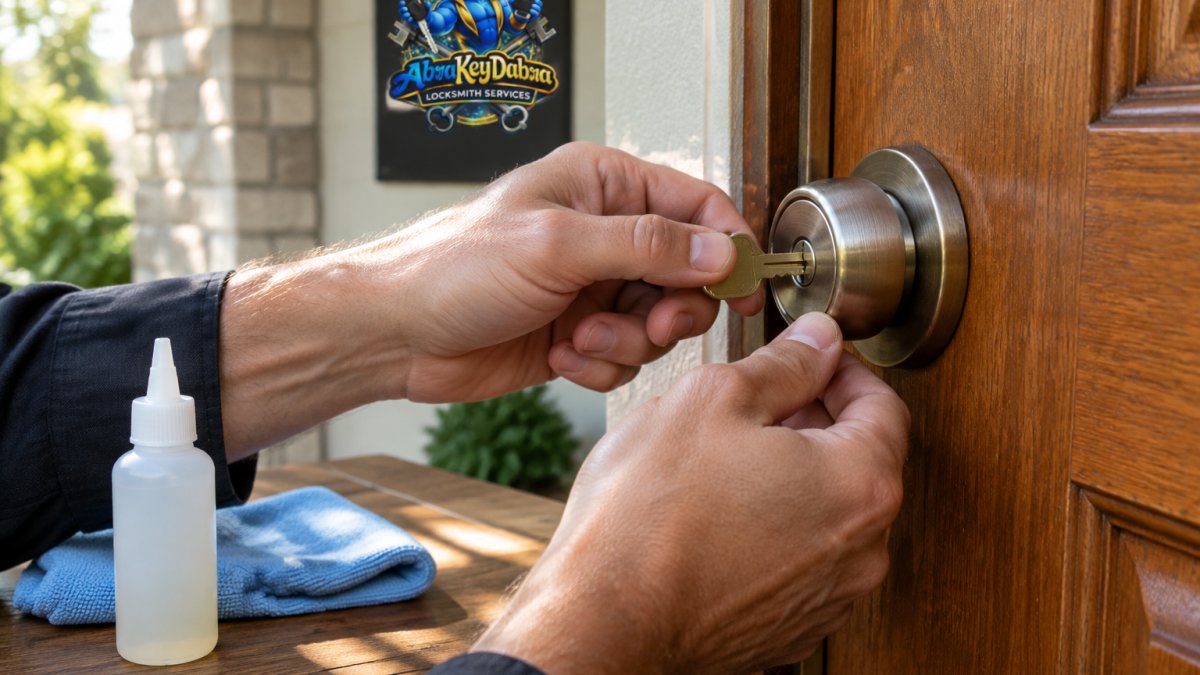
Here is how to fix a door lock that won't turn with key, by cause:
- Worn key: Cut a new key from the original, not from a copy of a copy.
- Dirty cylinder: Blow out debris with compressed air, then add a small amount of lubricant.
- Dry cylinder: Apply a silicone-based lock lubricant to the key and work it in.
- Misaligned bolt: Loosen the strike plate screws, nudge the plate until the bolt drops in cleanly, then tighten.
- Loose knob or handle: Tighten the mounting screws on both sides of the door.
Watch out: never force a key that will not turn. A bent key can snap off inside the cylinder, and removing a broken key is a job for a locksmith.
Here is the fix for each cause of a stiff lock, in the order the article lists them.
| Problem | Fix |
|---|---|
| Worn key | Cut a new key from the original, not a copy of a copy |
| Dirty cylinder | Blow out debris with compressed air, then add a small amount of lubricant |
| Dry cylinder | Apply a silicone-based lock lubricant to the key and work it in |
| Misaligned bolt | Loosen strike plate screws, nudge the plate, then tighten |
| Loose knob or handle | Tighten the mounting screws on both sides of the door |
Choosing the Right Stiff Door Lock Lubricant
The right stiff door lock lubricant is a silicone-based spray or a dry PTFE (polytetrafluoroethylene) lubricant. Both leave a thin, dry film on the cylinder pins and springs without attracting dust.
Less is more here. Too much lubricant traps dirt and makes the problem worse over time. A common pattern is to reapply every six to twelve months, or whenever the key starts to feel dry, rather than on a fixed schedule.
Why Silicone and PTFE Work
Silicone and PTFE lubricants are commonly used on lock cylinders because they leave a dry film that does not attract lint or grit.
Products to Avoid in Your Lock Cylinder
- Graphite powder: fine for some older locks but it clumps when mixed with other products and can bridge the pin chambers, causing the key to bind.
- Cooking oil or WD-40 as a long-term fix: both attract dust and gum up the pins. WD-40 is a solvent and water displacer, not a long-term lubricant, and it will wash away the factory lubricant inside the cylinder.
- Grease: too thick for a keyway and it collects grit fast, turning into a paste that slows the pins.
Watch out: never spray lubricant into a lock that is already misaligned with the strike plate. The lubricant will mask the friction for a few days, but the bolt will still rub, and you will be back to a stiff lock with a dirty cylinder.
If your lock is old and the pins are worn, lubricant only buys time. You can learn more about our lock replacement services.
Signs of a Failing Door Lock You Should Not Ignore
A lock that grinds, sticks, or needs a wiggle every time is telling you something. The signs of a failing door lock include:
- The key turns only after you jiggle it
- The knob feels loose or wobbly
- You see rust or dark residue on the key
Any one of these means the lock is wearing out. A failing lock is a security risk, not just an annoyance. If the hardware is past saving, replacing it is often the more practical choice.
Weather, Door Pressure, and Lock Type Differences
Weather changes how a lock feels. Humid summers swell wooden doors, and cold snaps shrink them. Both shift the door frame and put pressure on the bolt. If your lock sticks only in certain seasons, alignment is the likely cause, not the cylinder. A door that swells in July and sticks again in January is telling you the frame is moving, not that the lock is failing.
Seasonal Patterns to Expect
- Summer humidity: wood doors absorb moisture and swell, pushing the strike plate out of line with the bolt. The lock may turn freely with the door open and bind when closed.
- Winter cold: wood shrinks and metal contracts, which can open a gap between the door and the frame. The bolt may rattle or fail to catch fully.
- Spring and fall: temperature swings cause the door to move back and forth, so a lock that worked last week may stick this week.
The fix for seasonal sticking is usually a strike plate adjustment, not a new lock. Loosen the strike plate screws, nudge the plate a sixteenth of an inch in the direction the bolt needs, and tighten. If the door itself has warped, a locksmith can rehang or plane the door rather than replace the hardware.
Lock Type Differences
Lock type matters too. Each design puts stress on a different part, so the same symptom points to different causes.
- Deadbolts: the longer bolt feels resistance sooner when misaligned. A deadbolt that sticks only when the door is closed is almost always a strike plate or door alignment issue, not a cylinder problem.
- Knob locks: the cylinder wears faster because the knob takes daily hand pressure. A knob that turns hard but a deadbolt above it turns fine points to a worn knob cylinder.
- Lever locks: the lever handle multiplies force, so a stiff lever can mask a dry cylinder until the key finally binds. Check the keyway first, then the lever spring.
A safe diagnostic sequence is to test the key in another lock, inspect the keyway, and check the bolt with the door open before you assume the cylinder is at fault. That order isolates weather and alignment problems from true lock wear.
When to Call a Licensed Locksmith for a Stiff Lock
Call a licensed locksmith when the key is stuck, the key has broken off, or the lock will not secure the door. Also call if you have tried cleaning and lubricating and the lock still fights you. Those cases point to internal damage that needs a pro.
Before you hire anyone, ask three questions:
- What is the total price, all in?
- What is your street address?
- Can you show your license and insurance?
That short script can help you avoid surprises when hiring any locksmith. If you are worried about being locked out, read our guide on what to do when locked out of your house, and learn more about pricing questions to ask before you call. Some homeowners choose re-keying over replacement to restore access without new hardware.
Frequently Asked Questions
How do you fix a door lock that is hard to turn?
Start by isolating the cause. Test the key in another lock to rule out a worn key, then inspect the keyway for dirt or debris. If the cylinder is dry, apply a small amount of silicone or graphite lubricant and work the key in and out several times. If the bolt drags against the strike plate, loosen the plate screws and adjust it. A door lock hard to turn because of a bent key or damaged cylinder needs a replacement key or cylinder, which a licensed locksmith can handle.
Is WD-40 good for stiff door locks?
WD-40 is not a good choice for a stiff door lock lubricant. It is a solvent-based product that can strip away the factory lubricant inside the cylinder and attract dust, which makes the problem worse over time. Use a silicone-based or graphite lubricant instead, applied sparingly. If the lock is already gummed up from previous WD-40 use, a locksmith may need to clean the cylinder before re-lubricating it.
Can a misaligned door cause a lock to be hard to turn?
Yes. A door that has shifted on its hinges or swollen from humidity can push the deadbolt or latch out of line with the strike plate. You may feel resistance or need to lift the door handle to turn the key. Check the gap between the door and frame, and look for wear marks on the strike plate. Adjusting the hinges or strike plate often solves the problem without replacing the lock.
When should you replace a stiff door lock instead of repairing it?
Replace the lock when you see signs of a failing door lock: the key sticks at the same point every time, the cylinder feels loose or wobbly, the key comes out with metal shavings, or the lock has been forced. A lock that is more than 10 years old and has been lubricated and cleaned without improvement is also a candidate for replacement. A licensed locksmith can inspect the cylinder and tell you whether a repair or a full replacement is the safer choice.
A stiff lock rarely fixes itself, and forcing it can cost you a broken key or a damaged cylinder. If the steps above do not free up the turn, call Abra Key Dabra Locksmith Services. Our licensed and insured technicians respond fast, carry the right hardware, and quote the full price before we arrive. Get a quote today and get your door locking smoothly again.

Tags