
Last Updated: November 26, 2026
Quick Summary
The best dry lubricant for exterior door locks is a PTFE-based spray, often sold as Teflon lubricant. It leaves a thin dry film inside the cylinder that smooths key turning without collecting dust, dirt, or grit the way oil-based products do. A dry lubricant deposits a non-sticky film and leaves no wet residue, which is why it wins on an exterior door lock.
- Spray a two-second burst of PTFE dry lubricant into the keyway, then work the key in and out.
- Silicone spray beats standard WD-40 for exterior locks because it dries without sticky residue.
- Graphite powder resists damp weather poorly and can clump and stain in exterior locks.
- Lubricate a main exterior door lock two to three times a year, and rarely used doors once a year.
- Call a locksmith if the key still drags after a clean, correct dry-lubricant application.
Table of Contents
- What is the best dry lubricant for exterior door locks?
- Graphite vs. PTFE lock lubricant
- How to lubricate an exterior door lock
- Silicone spray vs. WD-40 for locks
- Why dry lubricants are preferred for exterior locks
- How often should you lubricate an exterior lock?
- When to call a locksmith
- Frequently Asked Questions
What is the best dry lubricant for exterior door locks?
The best dry lubricant for exterior door locks is a PTFE-based spray, often sold as Teflon lubricant.
PTFE sprays are generally considered a strong choice for exterior doors because they hold up through rain, humidity, and freezing nights without turning gummy.
A dry lubricant deposits a non-sticky film and leaves no wet residue, which is why it wins on an exterior door lock.
Graphite vs. PTFE lock lubricant
Graphite is a fine powder that reduces friction inside a cylinder; PTFE is a synthetic polymer that sprays on wet and dries to a slick film. Both free a stiff lock, but they behave very differently outdoors.
| Lubricant | Best For | Weather Resistance | Dust & Dirt | Watch Out For |
|---|---|---|---|---|
| PTFE (Teflon) spray | Exterior door locks, keyways | Good through rain and cold | Repels grit, stays dry | Needs a light hand, not a soak |
| Graphite powder | Interior locks, padlocks | Poor in damp air | Can clump and stain | Messy, hard to clean out |
| Silicone spray | Hinges, latches, hardware | Fair | Low residue | Can attract dust if over-applied |
| Oil-based / WD-40 | Quick temporary freeing | Poor long term | Attracts dust, turns gummy | Leaves sticky residue, traps debris |
How to lubricate an exterior door lock
Spray a short burst of PTFE dry lubricant into the keyway, work the key in and out several times, wipe off overspray, and finish with a few full turns.
- Clean first. Blow or brush loose dust out of the keyway.
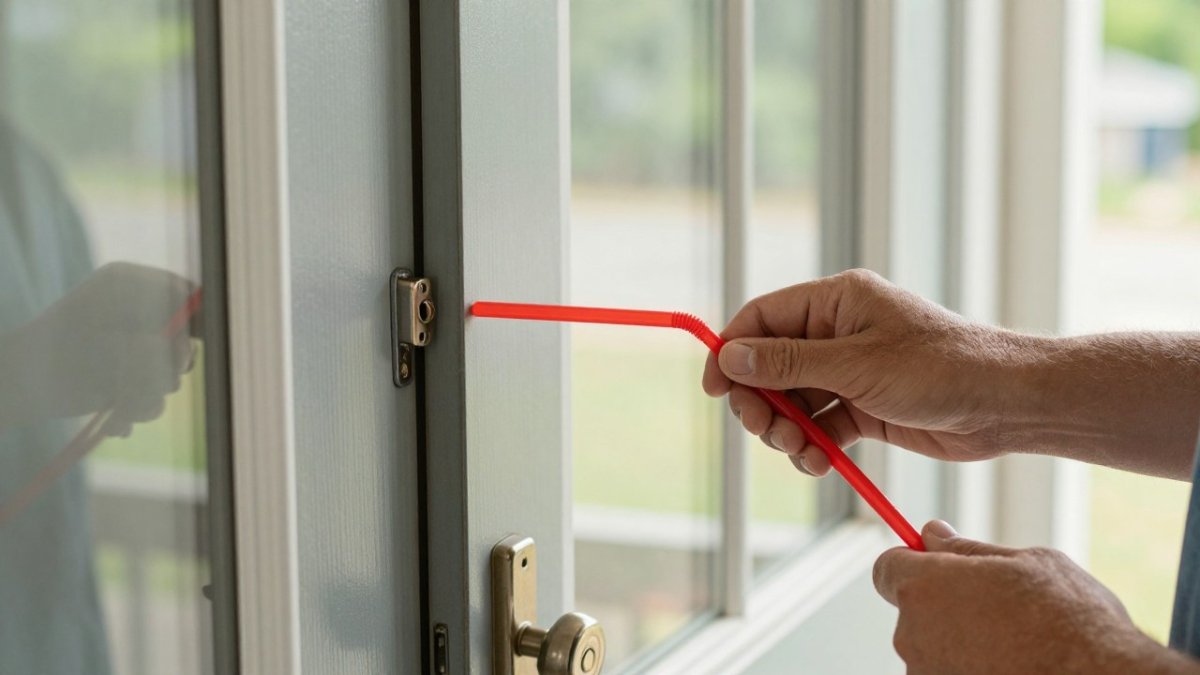
- Fit the straw. Aim at the pin-tumbler cylinder, not the door face.
- One short burst. Two seconds is plenty.
- Work the key. Insert, remove, and turn both ways to coat the pins.
- Wipe the hardware. Remove overspray so it does not stain.
- Test the turn. The key should move smoothly with light pressure.
If the lock is still stiff after a proper dry-lubricant application, the problem may be a worn key, a misaligned strike plate, or a failing cylinder, not a lack of lubricant. Our guide to a door lock that's hard to turn walks through that diagnostic sequence. If the cylinder is worn out, lock rekeying and replacement options may be the better fix, and you can book a locksmith service call when you are ready.
Silicone spray vs. WD-40 for locks
Silicone spray is the better of the two for an exterior door lock. It dries to a light film and does not leave the sticky residue that standard WD-40 does. WD-40 works as a quick freeing agent, but it is a wet, oil-based product, and wet lubricants attract dust.
That dust mixes with the oil and forms a paste inside the keyway, so the lock stiffens again and grit wears the pins.
Why dry lubricants are preferred for exterior locks
Exterior door locks face rain, humidity, temperature swings, and blowing dust, and a dry film handles all four better than oil: it does not hold moisture against the metal, freeze into a gummy film, or grab grit that grinds down pins and springs.
A wet lubricant feels smoother for a week; a dry lubricant keeps the mechanism clean for months, which is what prevents sticking on a front door that cycles every day.
How often should you lubricate an exterior lock?
Two to three times a year is sensible for a main exterior door, and once a year for rarely used doors. Add a treatment after heavy weather, a long dry spell, or any time the key starts to drag.
Padlocks, garage entry locks, and commercial exit doors benefit from the same routine.
When to call a locksmith
Call a locksmith when the key still drags after a clean, correct dry-lubricant application, when the key sticks in one spot, or when you notice a worn or bent key.
A licensed and insured locksmith can free a seized lock, replace a worn cylinder, or rekey your locks so old keys no longer work. For more maintenance and security advice, browse our locksmith tips and guides.
A stiff exterior lock is easy to ignore until the morning it will not turn.
Frequently Asked Questions
Is dry lubricant good for door locks?
Yes. Dry lubricants such as PTFE and graphite leave a non-sticky film that lets the pin-tumbler cylinder turn smoothly without collecting dust, dirt, or debris. Because they contain no oil, they are less likely to gum up in cold weather or trap moisture on an exterior door lock. That makes a dry lubricant a practical choice for locks exposed to rain, humidity, and freezing temperatures.
Should you use graphite or PTFE lubricant in a door lock?
PTFE (often sold as Teflon) is the safer default for most exterior locks because it is clean, nearly colorless, and works well in a range of temperatures. Graphite is a fine dry film that handles stiff locks well, but it is dark, can stain keys and hands, and does not suit locks with tight tolerances or certain finishes. Choose PTFE for general maintenance and graphite for older, looser mechanisms.
Can lubricant fix a key that sticks in a lock?
A sticking key often frees up after a light dose of dry lubricant worked in with the key. If the lock still binds, or the key feels loose and worn, the problem may be a worn key, a misaligned door, or a damaged cylinder rather than a lubrication issue. Stop forcing the key and have a licensed technician inspect the lock before it seizes completely.
