
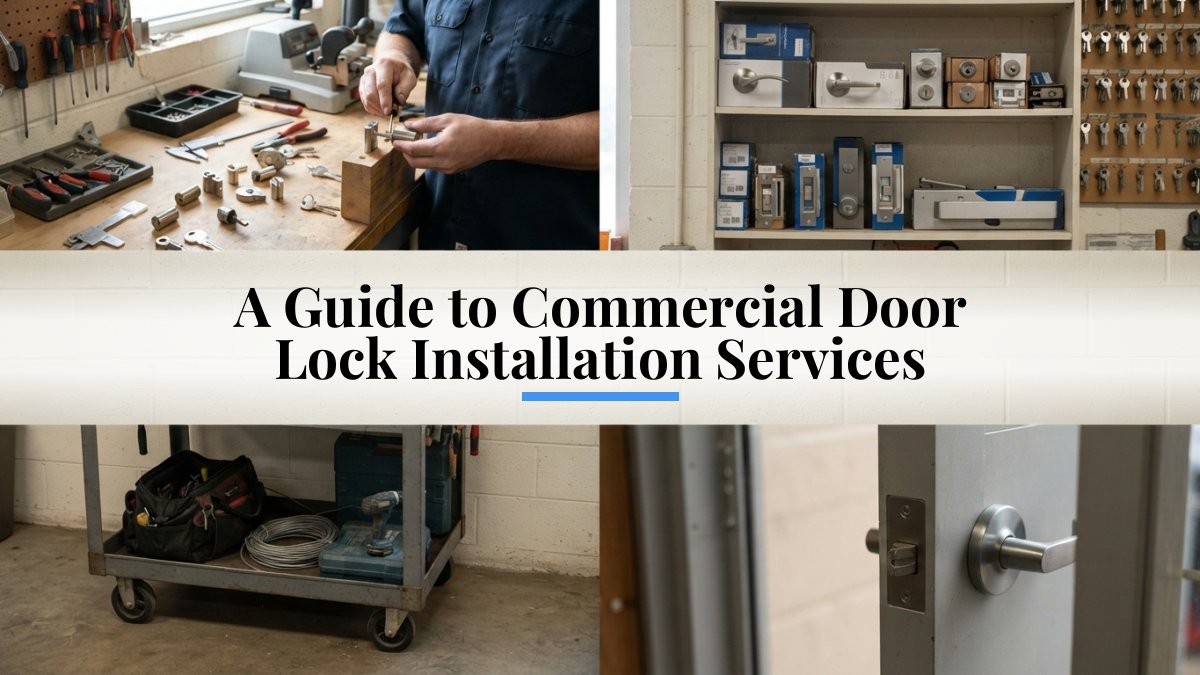
Last Updated: November 5, 2026
Quick Summary
Commercial door lock installation services cover the assessment, hardware selection, fitting, adjustment, and testing of locking hardware on business doors, from a single office entry to a full storefront system. A proper installation visit includes inspecting the door and frame, recommending a lock type that matches the door material and use, and installing the hardware correctly.
- Glass storefront doors need storefront locks built for narrow aluminum stiles, not standard deadbolts.
- Mortise locks suit solid core or steel doors with constant traffic and combine latch and deadbolt in one unit.
- Rekey when staff turn over or keys are lost; replace when hardware is worn, damaged, or outdated.
- Exit doors must open on a single motion without a key from the inside.
- Electronic access control lets you delete a departed employee's credential instead of rekeying every door.
Table of Contents
- What Commercial Door Lock Installation Services Cover
- Choosing the Right Lock Type for Every Door and Business Use
- What Drives Commercial Door Lock Installation Cost
- The Installation Process, From Assessment to Final Test
- Mortise Lock Installation: When a Heavier Lock Body Makes Sense
- Commercial Storefront Door Deadbolt Replacement
- Business Lock Rekeying vs. Full Replacement
- Code, Fire-Egress, and Accessibility Requirements to Plan For
- Electronic Access Control and Key Control for Growing Businesses
- Request a Commercial Security Assessment and Quote
- Frequently Asked Questions
What Commercial Door Lock Installation Services Cover
Commercial door lock installation services cover the assessment, hardware selection, fitting, adjustment, and testing of locking hardware on business doors, from a single office entry to a full storefront system. At Abra Key Dabra Locksmith Services, we handle that work for businesses and property managers across the Greater Evansville area, and we start every job by finding out what the door actually needs.
A commercial door is not a house door with a bigger lock on it. It swings dozens of times a day, it may be a glass storefront panel or a steel fire door, and it has to satisfy egress rules that residential hardware never touches. That changes which locks fit, how they mount, and how often they need service.
Here is what a proper installation visit covers:
- Inspecting the door, frame, and existing hardware for wear or misalignment
- Recommending a lock type that matches the door material and how the space is used
- Installing the lock and its hardware correctly
The NFPA fire door inspection guidance explains why exit hardware has to work on the first push, every time. If your door fails that test, the lock is the wrong lock no matter how good it looks.
Choosing the Right Lock Type for Every Door and Business Use
The right lock depends on three things: what the door is made of, how many people use it, and what you need to control. A stockroom door and a customer entrance have almost nothing in common.
Cylinder locks are the most common choice for solid core doors. A keyed cylinder sits inside a knob or lever and turns a latch. They are simple, reliable, and easy to rekey later.
Mortise locks set the lock body inside a pocket cut into the door edge. They handle heavier traffic and give you a sturdier latch and deadbolt in one unit.
Deadbolts add a separate, keyed bolt above the handle. On a commercial door, a deadbolt should be rated for the door's material and mounted with a reinforced strike.
Panic bars are used on many exit doors. A push bar releases the latch with body weight.
Electronic locks and smart locks replace the key with a code, card, or fob. They make sense when staff turnover is high and you want to revoke access without changing hardware.
Matching Hardware to Storefront, Glass, and Solid Core Doors
Glass storefront doors need hardware designed for narrow stiles and tempered glass. A standard deadbolt will not mount to a glass panel, so you use a storefront lock built for an aluminum frame. Solid core and steel doors take a wider range of hardware, including mortise locks and heavy-duty cylindrical sets. Fire-rated doors are the strictest case, and their hardware needs to be appropriate for the door.
What Drives Commercial Door Lock Installation Cost
Pricing for commercial door lock installation depends on the hardware, the door prep, and the labor to fit it. Pricing depends on the specific job, so we recommend contacting us through our website for a quote tailored to your doors.
A written quote is the best way to understand what your project will cost. Ask for the scope in writing, including the hardware, labor, and any door prep, so you can compare it clearly with other options. You can request a quote through our website.
The Installation Process, From Assessment to Final Test
Every install follows the same sequence, and skipping a step is how doors end up sticking, rattling, or failing inspection.
- Assessment. We check the door, frame, and existing hardware. We note the door thickness, the backset, and whether the frame is square.
- Hardware selection. We match the lock to the door material and the building's use, then confirm the hardware is rated for that door.
- Prep and fit. We drill or adjust the door only as needed, then set the lock body, cylinder, and strike plate.
- Alignment. We check that the door closes cleanly and the latch seats in the strike without forcing.
- Testing. We test the key, the latch, the deadbolt, and any panic hardware, then hand over the keys and explain the maintenance.
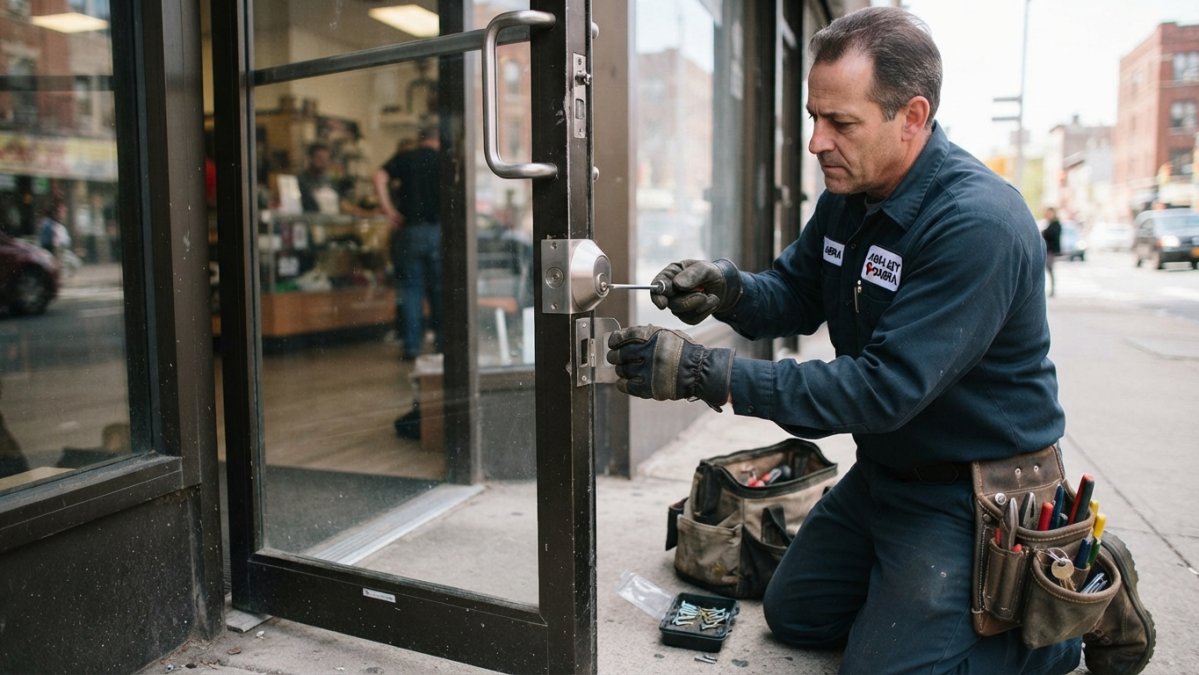
A common mistake is mounting a new lock on a door that is already out of alignment. The lock gets blamed, but the frame or hinge is the real problem. We check alignment first so the hardware lasts.
Mortise Lock Installation: When a Heavier Lock Body Makes Sense
Mortise lock installation is the right call when a door takes heavy daily use and you want one solid unit instead of a separate knob and deadbolt. The lock body sits inside a pocket in the door edge, and the latch and bolt both work from that single housing.
Choose a mortise lock when:
- The door is solid core or steel and gets constant traffic
- You want a deadbolt and latch in one piece of hardware
- The building needs a lock that holds up to years of use
- You are matching existing mortise hardware on an older building
Mortise work takes more skill than a surface-mounted lock. The pocket has to be cut to the right depth, and a sloppy cut weakens the door. If your door already has a mortise pocket, replacing the body is usually faster than switching lock types.
Commercial Storefront Door Deadbolt Replacement
Commercial storefront door deadbolt replacement is different from residential work because the door is usually a narrow aluminum frame around glass. You cannot cut a standard deadbolt into that frame. Storefront deadbolts are built to fit the slim stile and lock into the frame or floor.
Signs your storefront deadbolt needs replacing:
- The key turns hard or the bolt will not fully extend
- The door shifts or rattles when locked
- The cylinder spins or feels loose in the housing
- The bolt no longer lines up with the strike
We measure the stile width and the frame before ordering, because storefront hardware is not one-size-fits-all. Getting the measurements right the first time saves a second visit.
Business Lock Rekeying vs. Full Replacement
Business lock rekeying changes the pins inside the cylinder so old keys stop working and new keys take over. Full replacement swaps the whole lock. Rekeying costs less and keeps your existing hardware; replacement makes sense when the hardware is worn, damaged, or outdated.
| Situation | Rekey | Replace |
|---|---|---|
| Staff turnover or lost keys | Yes | No |
| New tenant moving in | Yes | No |
| Lock is loose, damaged, or hard to turn | No | Yes |
| Upgrading to a higher security grade | No | Yes |
| You want to keep the current hardware | Yes | No |
If you have moved into a new space or lost a set of keys, changing who has access without replacing the locks is usually the fastest and least expensive fix. When the hardware itself is worn or you want a stronger lock, new locks installed by licensed technicians is the better move. We will tell you which one your door actually needs.
Code, Fire-Egress, and Accessibility Requirements to Plan For
Exit doors have to open on a single motion, without a key, from the inside. That is the core of fire-egress code, and it is the rule most often broken when someone adds a padlock or a second deadbolt to a back door.
What to plan for:
- Egress hardware. Exit doors need panic hardware or a single-motion release, not a keyed lock on the inside.
- Fire-rated doors. Hardware on a rated door must be listed for that door. Unlisted hardware can void the rating.
- Accessibility. Handles and operating hardware need to be usable without tight grasping or twisting.
- Clear paths. Nothing should block the door swing or the exit path.
The ADA Standards for Accessible Design set the rules for door hardware and operating force. For exit hardware that keeps your building compliant, see our commercial exit door push bar installation service.
Electronic Access Control and Key Control for Growing Businesses
Electronic access control can replace the key with a credential such as a code, a card, a fob, or a mobile phone. The advantage is control. When an employee leaves, you delete their credential instead of rekeying every door. But the systems differ in how much administration they demand, and that is the part most buyers underestimate.
Standalone electronic locks. A keypad or card lock that lives on the door and holds its own user list. No network, no software, no controller. You add and remove users at the lock or with a programming device. These suit a small office, a single suite, or a storage room where you want to drop the key but do not need a audit trail across many doors. The trade-off is that every door is managed separately, so a ten-door building means ten user lists to keep current.
Networked access control. Readers connect to a controller and software, so you manage permissions from one place, set schedules, and pull an audit trail of who entered when. This is the right fit when you have multiple doors, shift schedules, or a need to prove access history. The trade-off is infrastructure: controllers, wiring, a server or cloud subscription, and someone who owns the administration. Budget for the ongoing administration, not just the install.
Mobile credentials. Phones and wearables can replace cards, which cuts down on lost-card replacement and lets you issue and revoke access remotely. The catch is that the reader and the credential format have to support it, so it is a decision to make before you buy hardware, not after.
Key control and master keying. The low-tech version of the same idea. A master key system lets one key open common areas while staff keys open only their own doors, and a restricted keyway keeps employees from copying keys at a hardware store. Master keying is inexpensive to set up and needs no power or software, but it cannot give you an audit trail, and every lost key is a rekey decision.
Choosing between them. A common pattern is to keep mechanical locks on low-traffic interior doors and put electronic control on the entries that matter: the main entrance, the server room, the pharmacy or records area, and any door where you need to know who came through. That keeps cost and administration proportional to risk.
Administration is the real cost. Whichever system you choose, someone has to add users, remove them at separation, and review permissions on a schedule. A system nobody administers is worse than a key, because it looks controlled while access quietly accumulates. Decide who owns that task before you buy.
For a small medical office or a growing business weighing the options, choosing the best access control system for a small medical office walks through cost, credentials, and HIPAA scope door by door.
Request a Commercial Security Assessment and Quote
A security assessment can look at the entries and hardware in a building, so you can understand your options before any work begins.
Our technicians are licensed and insured, and we serve businesses and property managers across the Greater Evansville area. If you are weighing a full upgrade, you can request a quote through our website.
Frequently Asked Questions
How much does it cost to install a commercial lock?
Pricing depends on the specific job, so we recommend requesting a quote through our website. A standard cylindrical lock on a solid core door sits at a different point than a mortise lock body or a storefront deadbolt that requires frame modification. Ask for a written quote that separates hardware, labor, and any door repair before work begins, and confirm whether trip charges or after-hours rates apply.
How long does commercial door lock installation take?
A straightforward swap on a prepared door often finishes within an hour or two. Mortise lock installation and storefront deadbolt replacement take longer because the door and frame may need routing, reinforcement, or strike plate adjustment. Buildings with several doors, mixed hardware, or a master key system should expect a scheduled project rather than a single visit, and a good provider will walk the site first and give you a realistic timeline per door.
Should a business rekey or replace its locks?
Business lock rekeying changes the pins inside the existing cylinder so old keys stop working, which costs less and takes less time. Replacement makes more sense when the hardware is worn, the door has been damaged, or you want a higher security grade. After a tenant move-out, staff turnover, or a lost master key, rekeying usually solves the problem. If the lock is failing inspection or the door hardware is outdated, plan for replacement instead.
What type of lock is best for a commercial door?
It depends on the door. Storefront and glass doors typically use narrow stile hardware with a hook bolt or deadbolt. Solid core and hollow metal doors often take cylindrical or mortise locks. Exit doors need panic hardware that releases with a single motion. High-traffic entrances benefit from Grade 1 hardware rated for heavy use. A locksmith should assess traffic, door material, and fire-egress rules before recommending a commercial door lock.
Can a locksmith install a mortise lock?
Yes. Mortise lock installation is a routine job for a commercial locksmith, though it demands more precision than a cylindrical lock because the lock body sits inside a pocket cut into the door edge. The technician measures the door, routes the pocket, aligns the faceplate, and fits the trim and cylinder. On retrofit work, the existing pocket may need adjustment. Expect the job to take longer than a simple cylinder swap and to require a follow-up check of the strike alignment.
Are commercial door lock installation services licensed and insured?
Licensing rules for locksmiths vary by state and locality, and insurance is what protects you if a technician damages a door frame or glass during installation. Ask for the license number and a certificate of insurance before booking, and keep a copy with your project paperwork. A provider that cannot produce both on request is a risk, especially on storefront glass where a mistake can mean a costly replacement.
Do you offer same-day or emergency commercial lock service?
Many commercial locksmiths reserve capacity for urgent calls such as a broken lock on a main entrance, a failed panic bar, or a key that will not turn during business hours. Availability depends on the day and the provider's schedule, so call and describe the problem clearly. For planned installation work, booking ahead usually gets you a better window and avoids after-hours labor rates.
Your doors are only as secure as the hardware on them, and the wrong lock costs more to fix than the right one costs to install. Abra Key Dabra Locksmith Services brings licensed and insured technicians, fast response, and a full range of commercial lock and hardware services to every job. Get started with Abra Key Dabra Locksmith Services and secure every entry with hardware that fits, works, and passes inspection.

Tags