
Last Updated: November 6, 2026
Quick Summary
Secure a detached garage door from break-ins by blocking the emergency release with a zip tie through the cord and around the opener rail, then matching a track lock, slide bolt or deadbolt to your door type. Pair the manual lock with a battery-backed local alarm, since power and Wi-Fi may not reach a detached garage. Garage door security works best when the door is physically blocked, not just reliant on the opener.
- A thief can hook the emergency release cord through the top gap and pull to disengage the opener.
- Use a track lock or slide bolt on sectional doors so the door cannot roll up.
- Roll-up doors take a slide bolt or floor-mounted lock that engages the bottom rail.
- Side-hinged doors need a heavy-duty deadbolt or hasp plus hinge-side reinforcement.
- Keep shrubs below window height and add motion-activated lighting aimed at the approach and door face.
Table of Contents
- How Thieves Break Into Garage Doors
- How to Secure a Garage Door From the Inside
- How to Secure a Garage Door From the Outside
- Frequently Asked Questions
How Thieves Break Into Garage Doors
Most garage break-ins take seconds: a thief reaches through a gap or hooks the emergency release cord, and the door rolls up. Garage door security starts with knowing the weak points, hooking the release cord through the top gap, prying a weak lock, forcing the door-frame gap, walking through an unlocked side door, or grabbing a remote left in a car. A stiff lock is a common entry point; if yours is hard to turn, read up on why your lock is sticking.
How to Secure a Garage Door From the Inside
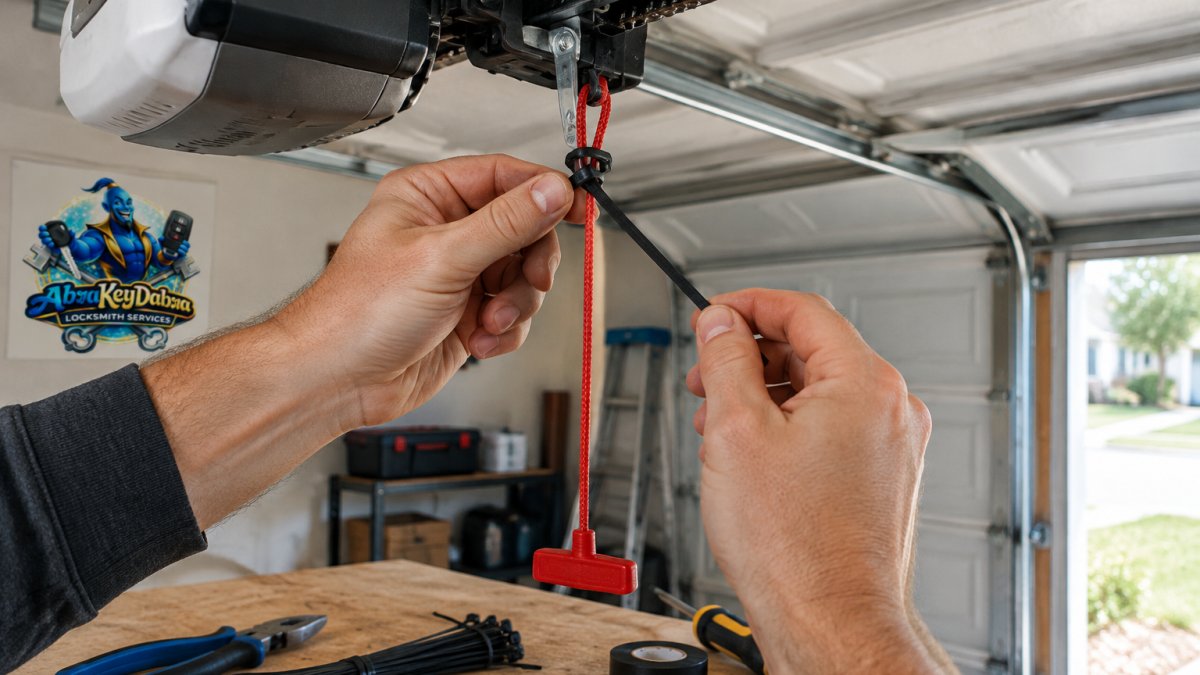
The fastest fix is the emergency release: on most openers the cord hangs from a trolley on the rail, and a thief can hook it through the top gap and pull to disengage the opener. A zip tie through the release cord and around the rail can stop the hook trick, but it is not a universal fix.
Start with the emergency release, safely
Close the door, disconnect the opener, loop a strong zip tie through the release cord and around the opener rail, keep the cord short, and test that the manual release still works from inside. A tie that is too thick or too tight can prevent the release from disengaging in an emergency, and some manufacturers specify their own release-handle or lockout accessories. Check your opener's manual, and if the garage is your only exit in a fire, use a purpose-built release lock or shield instead of a permanent tie.
Match the lock to the door type
- Sectional doors: A track lock or slide bolt pins the door track to the jamb so the door cannot roll up even if the opener is triggered.
- Roll-up doors: Use a slide bolt or floor-mounted lock that engages the bottom rail.
- Side-hinged (carriage-style) doors: Use a heavy-duty deadbolt or hasp at the meeting stiles plus hinge-side reinforcement, because the weak point is the hinge gap.
A garage door security bar or slide bolt clamps the door track so the door can't roll up, even if the opener is triggered. For hardware that resists bumping, picking, and drilling, upgrade to high-security locks installed by licensed technicians. If your door is older or the track is loose, have the track and hinges checked first, a lock on a flexing track can be pried past.
Account for the detached-garage setup
A detached garage changes the inside plan: the opener and lock are out of sight of the house, power may be unreliable, and Wi-Fi may not reach. Pair a manual track lock with a battery-backed local alarm so the door is physically blocked and the attempt is announced even when the network is down.
Match the lock to your door type so the door is physically blocked, not just reliant on the opener.
| Door type | Lock to use | Why it works |
|---|---|---|
| Sectional doors | Track lock or slide bolt | Pins the door track to the jamb so the door cannot roll up |
| Roll-up doors | Slide bolt or floor-mounted lock | Engages the bottom rail |
| Side-hinged (carriage-style) doors | Heavy-duty deadbolt or hasp at meeting stiles | Weak point is the hinge gap, so add hinge-side reinforcement |
How to Secure a Garage Door From the Outside
Exterior weak points matter just as much, and on a detached garage they are often the only thing a thief sees. The goal outside is to remove easy access and hiding places and make any attempt visible.
Inspect and fix in priority order
- Close and lock the main door. An open or cracked door is a reachable gap.
- Secure the side door. Use a quality deadbolt and reinforce the strike plate with long screws into the framing.
- Check the entry door between garage and house. Treat it as a primary barrier with an exterior-rated deadbolt.
- Cover or frost garage windows. Use film that still lets light in, and confirm any window lock works.
- Trim landscaping. Keep shrubs below window height and clear sightlines from the street.
- Add motion-activated lighting aimed at the approach and door face, not just the driveway.
- Add cameras with notifications. Confirm the signal reaches your network on a detached garage, or use a cellular or local-storage model.
Make the exterior work as a layered response
Deterrence is only the first layer: a motion light that triggers a camera recording and a phone notification gives you a record and a prompt response, and a local alarm siren adds an audible deterrent if the network is down. Decide in advance who checks the alert, call the police for a confirmed break-in, and avoid confronting anyone yourself. Test the whole chain monthly. A camera aimed only at the door face can miss someone reaching through the top gap, and a light that stays on all night can wash out the image, angle the camera to cover the approach and the door, and use motion activation.
If your locks are worn or outdated, professional lock replacement gives you quality hardware installed right. Lost your keys or moved in recently? Re-keying changes who has access without buying new locks. When you're ready to act, get a quote for installation or re-keying.
Frequently Asked Questions
How do thieves break into garage doors?
The most common method is the wire hook trick: a thief pushes the top of the door inward, slides a bent wire through the gap, and pulls the emergency release cord to disengage the opener. That can take under six seconds. Others force the door track with a pry bar, walk in through an unlocked side door, or use a code grabbed from an old remote. Layered garage door security, including a secured release and a track lock, closes the easy routes.
Can you lock a garage door from the outside?
Yes. Add an exterior lock or deadbolt to the entry or side door, install a lock on the door track, and keep the garage door closed when you are not using it. A garage door security bar or track lock stops the door from being pushed up, and a keypad or smart opener lets you control access without leaving a remote in the car.
Should I call a locksmith to improve garage door security?
A locksmith is the right call for lock and hardware work: re-keying the entry door, fitting a deadbolt, installing a track lock, or upgrading to a smart opener and keypad. Licensed and insured technicians can inspect your access points and advise on what needs replacing. For a detached garage with no power, ask about battery or mechanical options during the inspection.
Break-ins rarely involve force. They exploit small gaps: a reachable release cord, a weak lock, a dark driveway. At Abra Key Dabra Locksmith Services, our licensed and insured technicians install high-security locks and offer fast, professional service across the Greater Evansville area. Get started with Abra Key Dabra Locksmith Services and close the gaps before a thief finds them.

Tags