Last Updated: November 16, 2026
Quick Summary
Improving warehouse side door security starts with a checklist walk of every secondary entrance, then fixing what fails: latches, frames, deadbolts and strike plates. Pair commercial-grade locks with access control, entry logging and door-held-open alerts, and keep fire exits code compliant.
- A warehouse side door is any secondary entrance used by staff, contractors or delivery drivers, usually out of sight of the front office.
- A door that sticks or drags often gets forced shut with a kick, bending the frame and weakening the lock.
- The best lock for a side door is a commercial-grade deadbolt with a reinforced strike plate and a keyed lever or exit device.
- Reinforce the strike plate and hinge screws first, because a good lock on a weak frame lets the frame split.
- Issue key cards or fobs to named staff only, log every side door entry and review the access log weekly.
Table of Contents
- Start With a Warehouse Side Door Security Checklist
- Choose the Right Commercial Door Lock Types for Warehouses
- Add Warehouse Access Control Systems and Monitoring
- Frequently Asked Questions
Start With a Warehouse Side Door Security Checklist
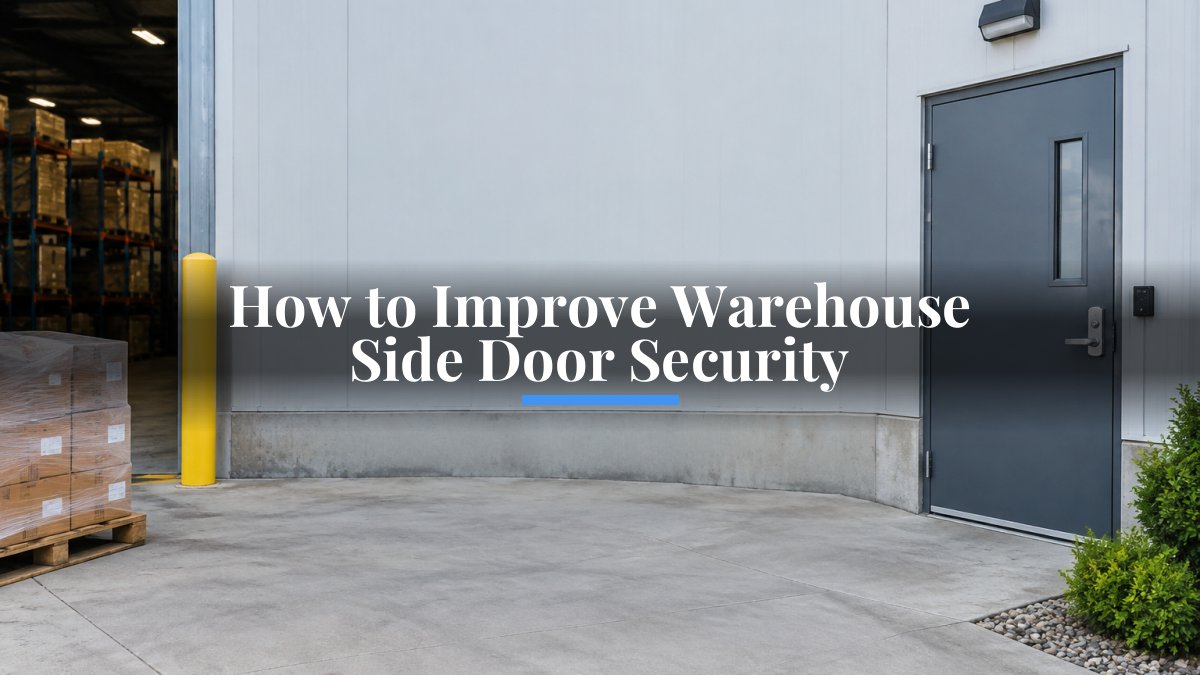
Warehouse side door security starts with a slow walk around the building, because most break-ins happen at the quiet door nobody watches. This guide from Abra Key Dabra Locksmith Services shows how to improve warehouse side door security without shutting down your dock or blocking a fire exit. A warehouse side door is any secondary entrance used by staff, contractors, or delivery drivers, usually out of sight of the front office, which is exactly why it gets targeted.
Walk up to each side door and check these points:
- Door closes and latches on its own, every time
- Frame is solid, with no cracks or loose hinges
- Deadbolt throws fully into the strike plate
- No gap between door and frame when locked
- Door cannot be propped open and left
- Outside area is lit and free of hiding spots
- Keys and codes are tracked, not shared
- Door alarm or alert works when tested
Write down what fails. A list of real problems beats a general worry.
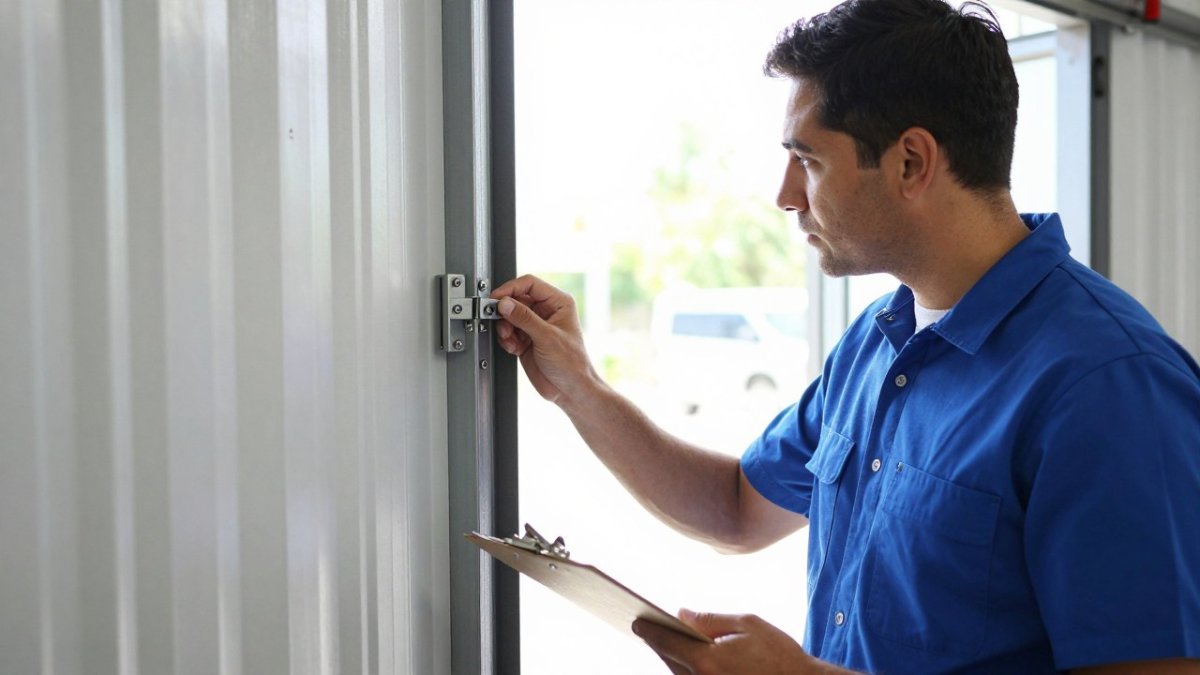
Watch out: a door that sticks or drags is often forced shut with a kick, bending the frame and weakening the lock. Worn or damaged locks are a common checklist finding; if yours fail the test, residential and commercial lock replacement covers swapping outdated hardware for solid, working locks.
Choose the Right Commercial Door Lock Types for Warehouses
The best lock for a warehouse side door is a commercial-grade deadbolt with a reinforced strike plate, paired with a keyed lever or exit device that meets fire code. Cheap residential locks do not hold up to daily warehouse use.
| Lock Type | Best For | Watch For |
|---|---|---|
| Commercial deadbolt | Main side doors | Needs a reinforced strike |
| Mortise lock | Heavy steel doors | Costs more to install |
| Exit device | Fire exits | Must stay code compliant |
A common mistake is bolting a good lock onto a weak frame: the lock holds, the frame splits. Reinforce the strike plate and hinge screws first. High-security cylinders add pick-resistant and drill-resistant protection where a door faces an alley or lot; high-security lock upgrades explain those options in more detail. For a full comparison of hardware and installation choices, see this guide to commercial door lock installation services.
Add Warehouse Access Control Systems and Monitoring
Warehouse access control systems decide who gets in, and monitoring tells you when someone did not follow the rules. Issue key cards or fobs to named staff only, set an access policy for contractors and delivery drivers, log every entry at each side door, turn on door-held-open and forced-entry alerts, and review the access log weekly. Tailgating is the quiet problem, one person badges in, three walk through, and a propped-open door alert catches it fast.
If a side door is also a fire exit, it must open freely during an emergency, so panic bar hardware has to be installed and maintained correctly; commercial exit hardware installation covers compliant push bar setup. Ready to price out the upgrade? Request a free locksmith quote and get the scope in writing before any work starts.
Your side doors are only as strong as their weakest hinge, and most warehouses have at least one that needs attention. Abra Key Dabra Locksmith Services sends licensed and insured technicians to assess commercial doors, install high-security locks, and repair exit hardware across the Greater Evansville area. We quote the job clearly before we arrive, so there are no surprises at the door. Get started with Abra Key Dabra Locksmith Services and lock down every entrance in your building.
Frequently Asked Questions
What type of lock is best for a warehouse side door?
A heavy-duty commercial-grade deadbolt or mortise lock paired with a reinforced strike plate is the usual starting point for a warehouse side door. The right choice depends on the door material, frame strength, and how often the door is used. Electronic locks and key card or key fob readers add audit trails and easier credential management. A locksmith can confirm which commercial door lock types fit your existing door without weakening the frame.
How often should warehouse door locks and hardware be inspected?
Walk the side door weekly to check the latch, closer, and frame for looseness or damage, and schedule a professional inspection at least once a year. High-traffic secondary entrances may need quarterly checks. A warehouse side door security checklist makes the weekly walk quick and consistent, and it helps you catch commercial door closer repair needs before the door stops latching and stays propped open.
Should warehouse side doors have access control?
Yes, if the door is used by staff, contractors, or delivery drivers. Warehouse access control systems with key cards, fobs, or mobile credentials let you restrict access, review access logs, and revoke a lost credential immediately. Pair the system with door status monitoring and a door-held-open alert so you know when the side door is propped or forced. Keep emergency exits code-compliant with panic hardware so egress is never blocked.
