
Table of Contents
- Why a Deadbolt Can Be Installed Backwards
- Step-by-Step Checks to Spot a Reversed Deadbolt
- Fixing the Problem and When to Call a Locksmith
- Frequently Asked Questions
Last Updated: November 21, 2026
Why a Deadbolt Can Be Installed Backwards
A deadbolt installed backwards is easy to miss at first, and knowing how to tell if a deadbolt is installed backwards can save you frustration. The lock still works, but the thumb-turn or key sits on the wrong side, or the bolt throws the wrong way. Most people discover this only when they try to lock or unlock the door.
Most of the time, the cause is simple: the lock was mounted for the wrong door handing. Left-hand and right-hand doors need different orientations, so a lock built for one can end up on the other.
Step-by-Step Checks to Spot a Reversed Deadbolt
Start by looking at the thumb-turn from inside the house, since this is the quickest way to learn how to tell if a deadbolt is installed backwards. If the lock is hard to turn, learn why a door lock is hard to turn and how to fix it. On a correctly installed deadbolt, turning it clockwise should lock the door, and counterclockwise should unlock it.
Watch out: do not force the bolt if it resists. Forcing a misaligned lock can damage the cylinder.
Next, check these signs:
- The thumb-turn sits on the hinge side of the door
- The bolt extends into the frame but will not retract cleanly
- The key turns the opposite direction from what you expect
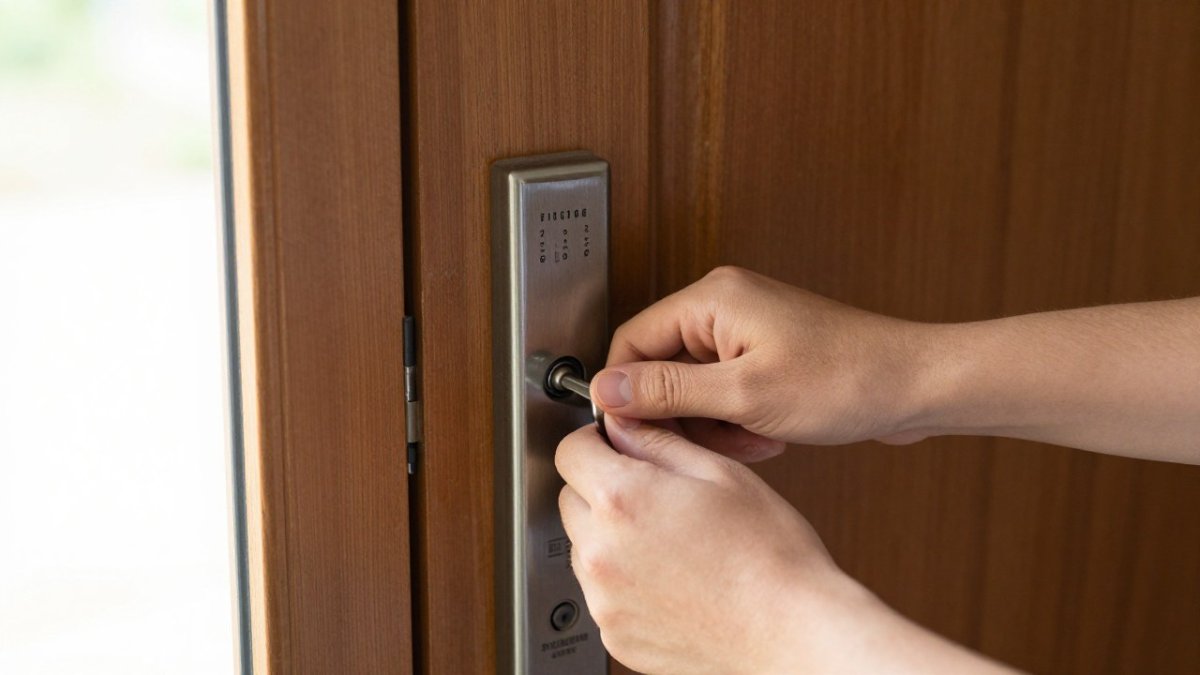
!A person's hands testing the thumb-turn of a deadbolt on a wooden front door, viewed from the interior side
Use these quick checks to confirm whether a deadbolt is installed backwards.
| Check | What to look for | Expected result |
|---|---|---|
| Thumb-turn position | Thumb-turn sits on the hinge side of the door | Correct install: thumb-turn on the opposite side from the hinge |
| Turn direction | Turn the thumb-turn clockwise and counterclockwise | Clockwise locks, counterclockwise unlocks |
| Bolt movement | Bolt extends into the frame but will not retract cleanly | Bolt should extend and retract smoothly |
| Key direction | Key turns opposite to what you expect | Key should lock and unlock in the expected direction |
| Force | Bolt resists movement | Do not force it; forcing can damage the cylinder |
Fixing the Problem and When to Call a Locksmith
Reversing a deadbolt is often a quick fix, but it depends on the lock model. For exit hardware that needs correct installation or repair, see commercial exit hardware installed right. Some locks can be reversed with a few screws, while others need the cylinder removed. If you also need to change who has access afterward, re-keying options let you keep your existing hardware.
If you are unsure, or if the door frame looks damaged, call a professional. Before hiring anyone, review what licensed versus unlicensed locksmiths mean for homeowners. Abra Key Dabra Locksmith Services can help you check the lock.
Frequently Asked Questions
How do you tell if a door lock is left or right handed?
Stand on the outside of the door and look at which side the hinges are on. Hinges on the left mean a left-hand door, and hinges on the right mean a right-hand door. Most deadbolts are sold for a specific door hand, and the thumb-turn should sit on the interior side. If the lock turns the wrong direction for the handing, it may be installed backwards. Check the hinge side first, then compare it with the lock's packaging or manufacturer instructions before making any changes.
Why does my deadbolt lock when I try to unlock it?
A deadbolt that resists turning often has a misaligned strike plate, a bolt that does not line up with the door frame, or a lock installed in the wrong orientation. Open the door and watch the bolt as you turn the key or thumb-turn. If the bolt binds at the strike plate, adjust the strike or the door before assuming the lock is backwards. Persistent resistance after alignment checks is a reason to have the lock inspected.
Can a deadbolt be installed upside down?
Some deadbolts can be mounted upside down, which can affect how the key or thumb-turn feels and how the bolt lines up with the strike plate. Check the manufacturer's instructions for that model, since some locks allow reversing and others do not. Do not attempt to reverse a lock that the manufacturer says cannot be reversed. If you are unsure, a locksmith can confirm the correct orientation for your door.
